GATE 10 is a complete re-implementation of GATE, the open-source Monte Carlo platform for medical physics built on Geant4. Simulations are now plain Python scripts, run multithreaded, and GATE can be embedded as a library in other software. Part I presents the new features, Part II the architecture behind them.
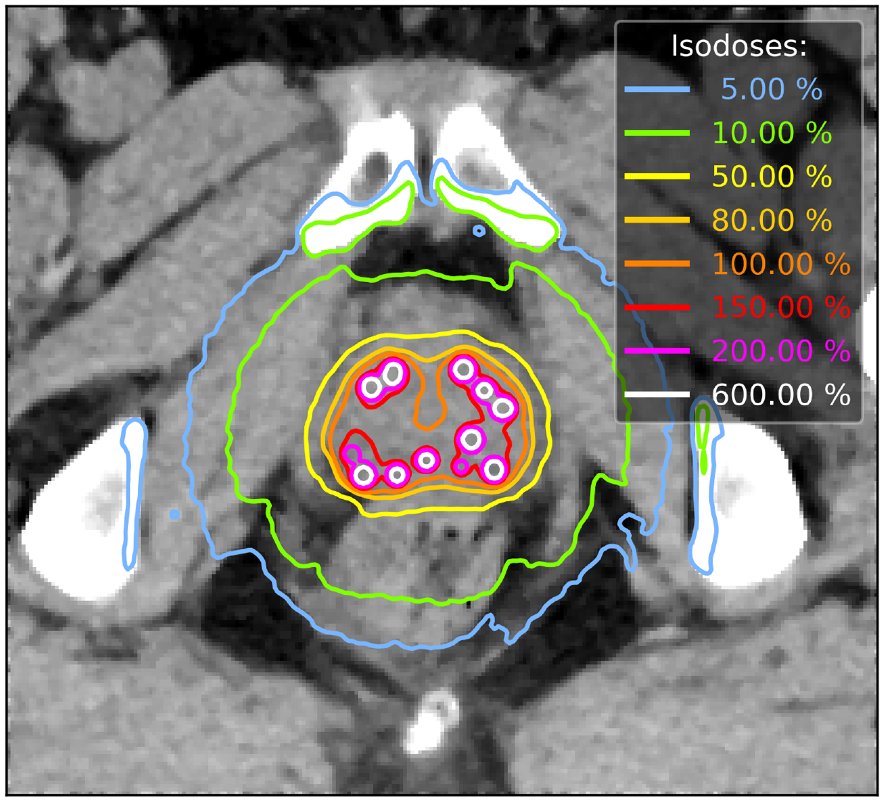
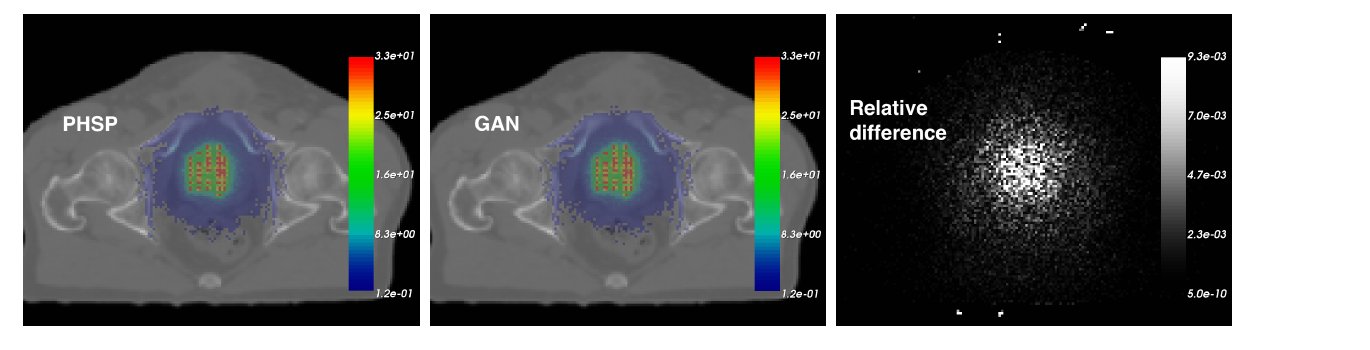
Prostate brachytherapy dose (isodoses) simulated with the new "parallel worlds" feature. Figure: Sarrut et al. 2026, Phys. Med. Biol., CC BY 4.0.
FFAA
Journal
Free flight angular acceptance (FFAA) variance reduction technique for SPECT Monte Carlo simulations
Sarrut D., Etxebeste A., Jacquet M., Létang J. M. · Physics in Medicine and Biology, 71(9), 095009, 2026
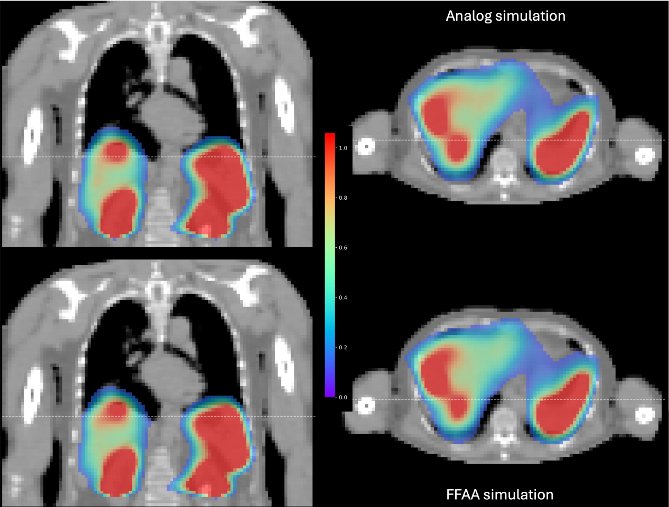
A variance reduction technique that makes SPECT Monte Carlo simulations about 100 to 200 times faster, without pre-computed detector response or training: primary photons are forced towards the detector, scattered photons are split and kept only when they can reach it, and the collimator and detector stay fully simulated.
Reconstructed images from the reference analog simulation (top) and FFAA (bottom). Figure: Sarrut et al. 2026, Phys. Med. Biol., CC BY 4.0.
Jacobian-Free Unrolling
Journal
Jacobian-Free Unrolling: memory efficient unrolled network for 3D SPECT Reconstruction
Constanza C., Kaprelian T., Etxebeste A., Sarrut D. · IEEE Transactions on Radiation and Plasma Medical Sciences, 2026
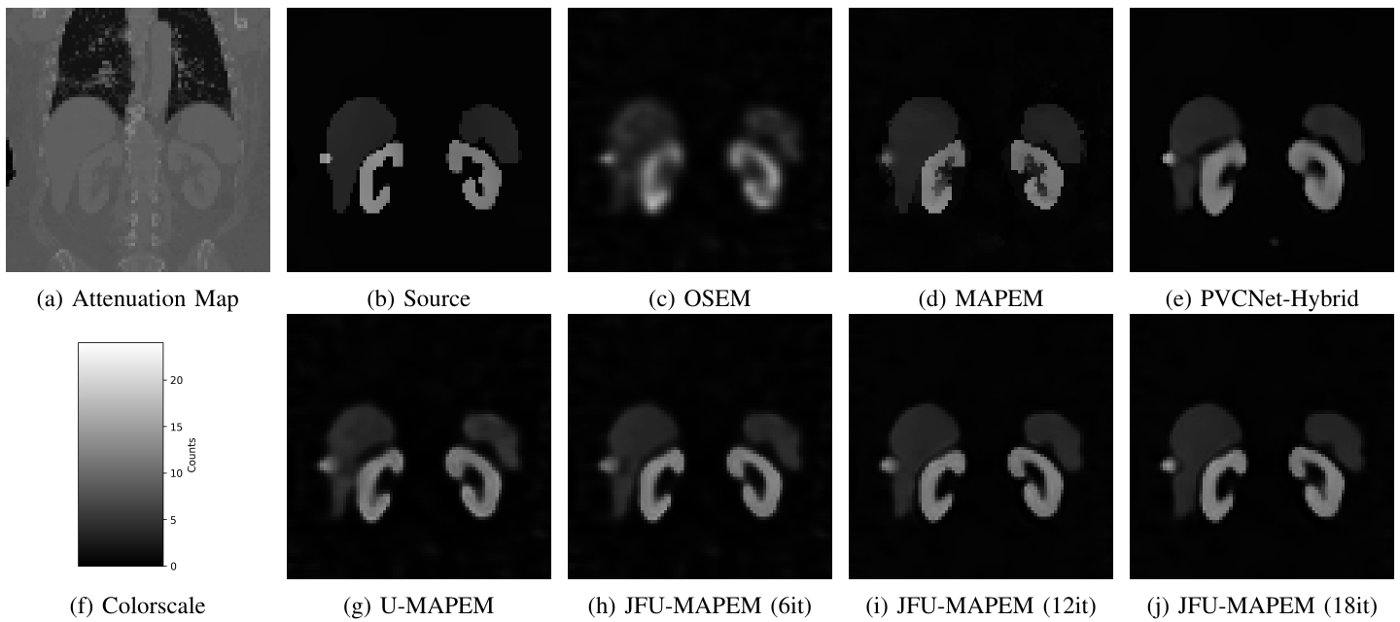
Deep "unrolled" reconstruction networks are hard to train for fully 3D SPECT because they need too much GPU memory. Jacobian-Free Unrolling back-propagates through the last iteration only, which makes 3D training possible, with better images than OSEM and MAPEM on simulated, phantom and patient ¹⁷⁷Lu data.
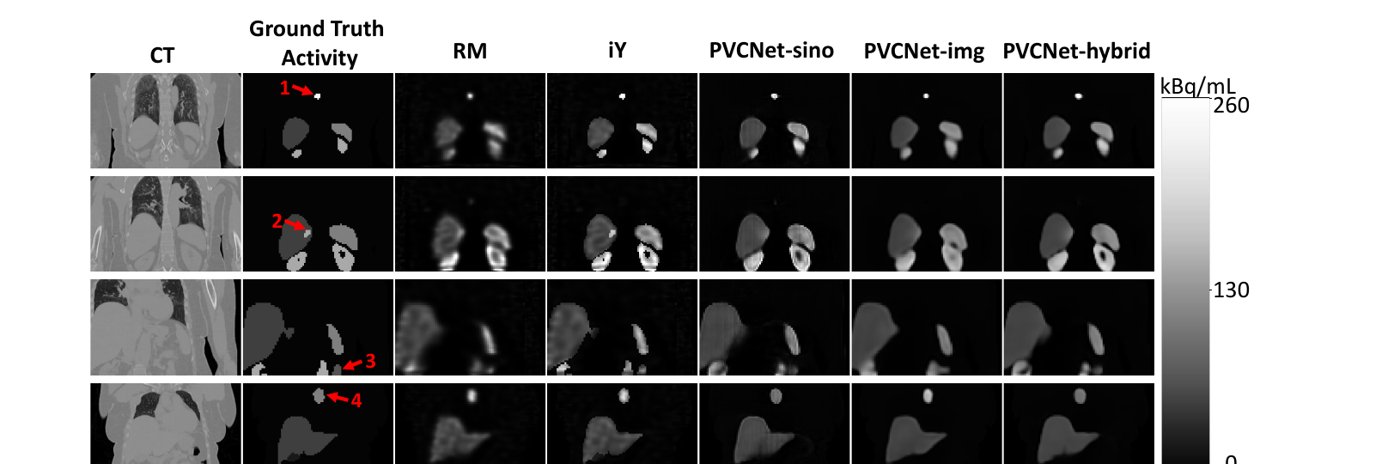
Partial volume effects blur small structures in SPECT and bias activity estimates, a key issue for ¹⁷⁷Lu dosimetry. Neural networks trained only on synthetic data correct them in the projections, in the image, or in both (hybrid); the hybrid version gave the best noise/resolution trade-off, with errors reduced by a third on a simulated patient.
The five correction methods compared with the ground truth on simulated data. Figure: Kaprélian et al. 2025, IEEE TRPMS, CC BY 4.0.
Predicting PSA50 response
Journal
Predicting PSA50 Response to 177Lu-PSMA Therapy Using Machine Learning and Automated Total Tumor Volume
Rios-Sanchez E., Giraudet A.-L., Sanchez-Lajusticia A., Pretet V., Paquet E., Baudier T., Badel J.-N., Sarrut D. · EJNMMI Physics, 12(1), 95, 2025
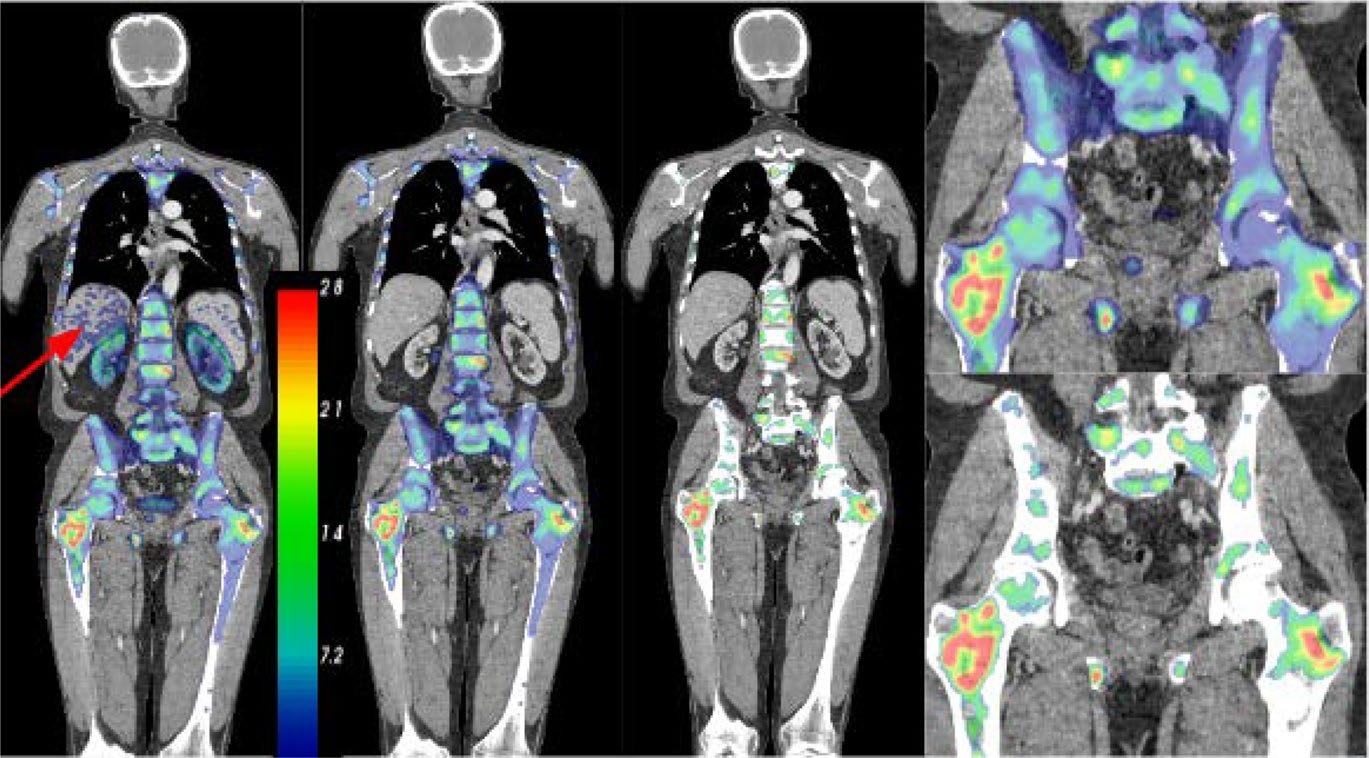
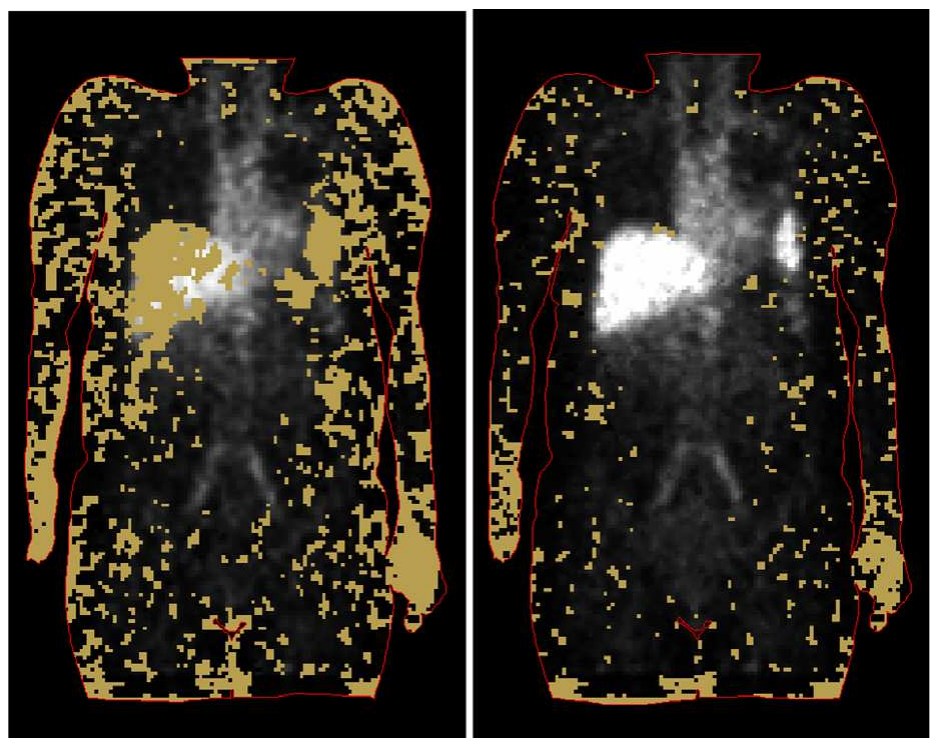
Can a PET/CT made before treatment predict which patients will respond to ¹⁷⁷Lu-PSMA therapy? The total tumour volume is extracted automatically from ⁶⁸Ga-PSMA PET/CT, and machine-learning models predict the PSA50 response of 139 patients as well as existing nomograms.
Automatic extraction of the total tumour volume from ⁶⁸Ga-PSMA PET/CT. Figure: Rios-Sanchez et al. 2025, EJNMMI Physics, CC BY 4.0.
Reducing the imaging workload of ¹⁷⁷Lu dosimetry
Journal
A review of 177Lu dosimetry workflows: how to reduce the imaging workloads?
Vergnaud L., Dewaraja Y. K., Giraudet A.-L., Badel J.-N., Sarrut D. · EJNMMI Physics, 11(1), 65, 2024
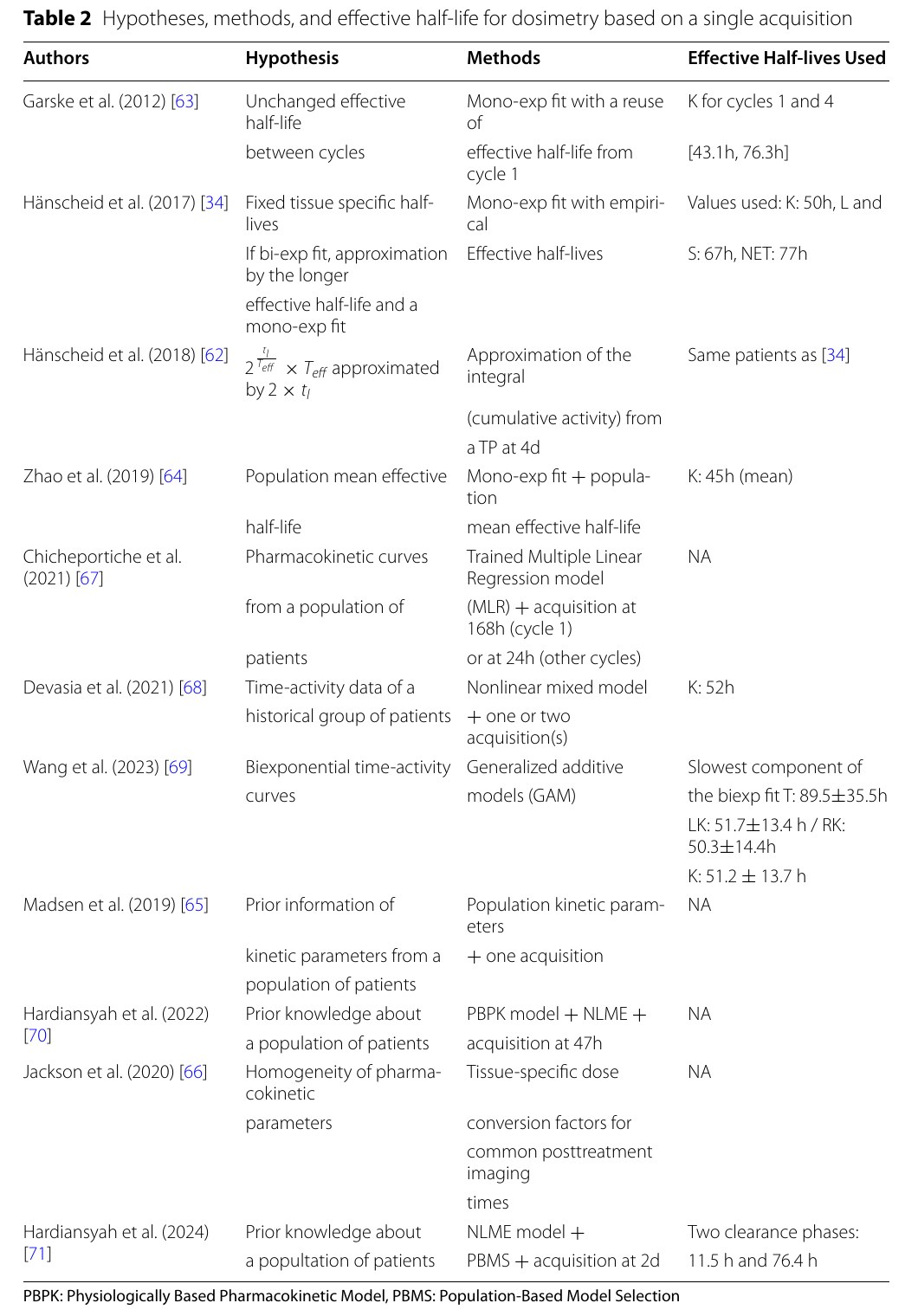
Dosimetry can personalise ¹⁷⁷Lu therapy, but it needs several SPECT/CT scans after injection. This review describes how to reduce that burden, with fewer or shorter acquisitions down to a single time point, with their assumptions and limits, for ¹⁷⁷Lu-DOTATATE and ¹⁷⁷Lu-PSMA.
Table 2 of the review: hypotheses, methods and effective half-lives used for dosimetry based on a single acquisition. Figure: Vergnaud et al. 2024, EJNMMI Physics, CC BY 4.0.
Photon source model for alpha emitters
Journal
A Photon Source Model for Alpha-Emitter Radionuclides
Sarrut D., Etxebeste A., Létang J. M. · Physics in Medicine & Biology, 69(9), 095009, 2024
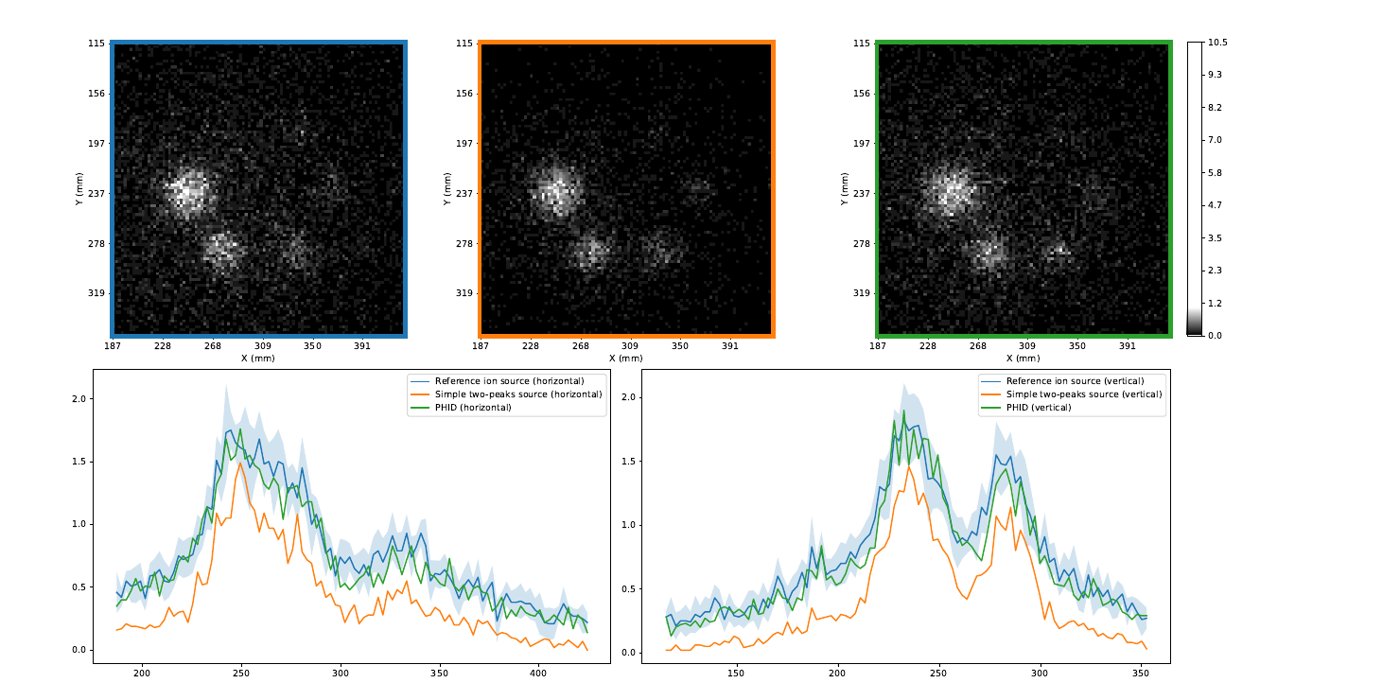
PHID emits directly the photons of the whole decay chain of alpha-emitter radionuclides such as ²²⁵Ac, with the right energies and timing (Bateman equations), instead of simulating every decay. About 30 times faster in a typical example, for any alpha emitter in Geant4, and open source in GATE 10.
²²⁵Ac SPECT projections of the IEC phantom with the reference ion source, a simplified two-line source and PHID, and their profiles. Figure: Sarrut et al. 2024, Phys. Med. Biol., CC BY 4.0.
GAN for SPECT Monte Carlo simulation
Journal
Modeling Complex Particles Phase Space with GAN for Monte Carlo SPECT Simulations: A Proof of Concept
Sarrut D., Etxebeste A., Krah N., Létang J.-M. · Physics in Medicine and Biology, 2021
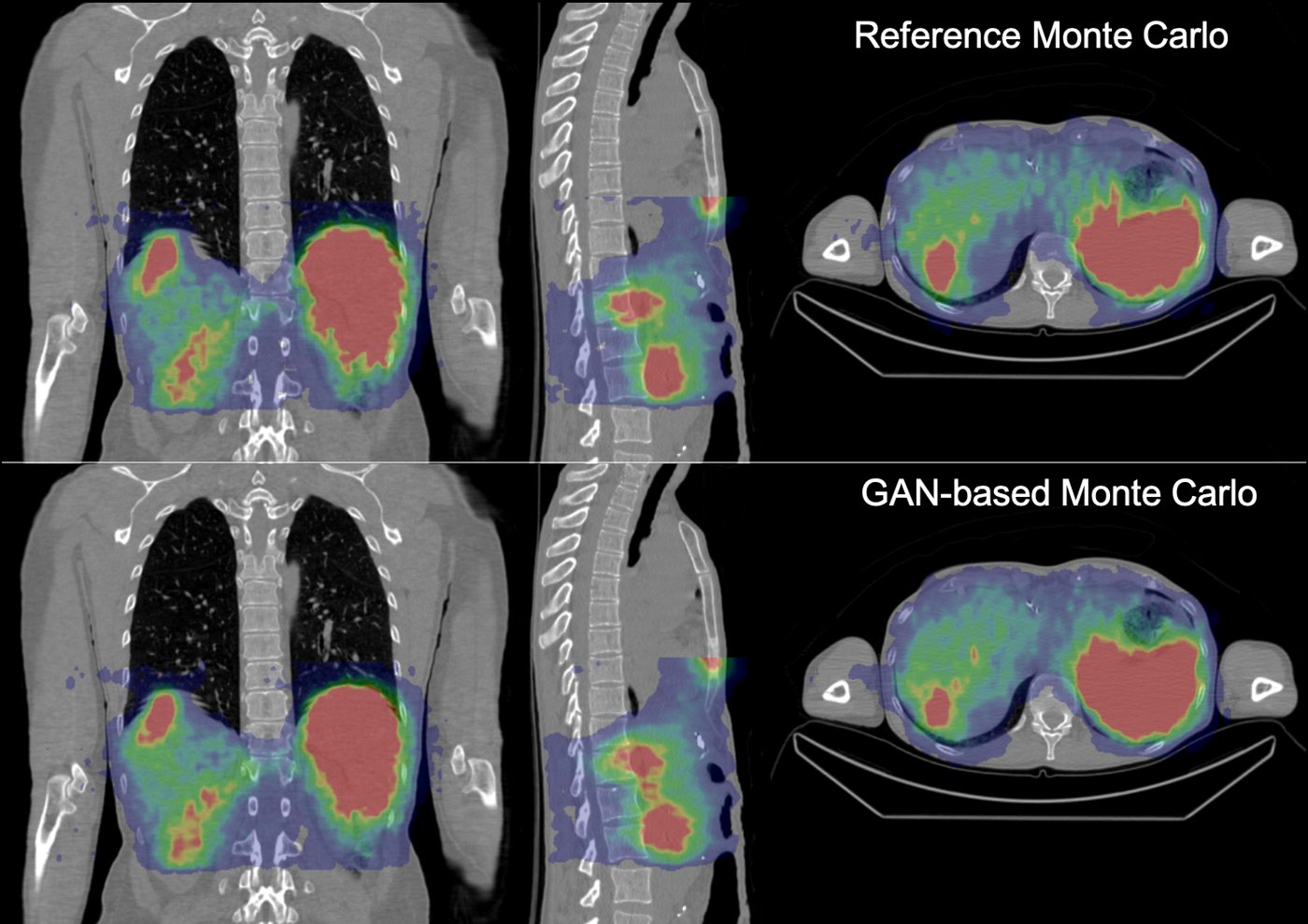
A generative adversarial network (GAN) learns the particles exiting the patient. Combined with a neural network for the detector response, it simulates a full rotating SPECT acquisition without tracking the particles in the patient, with reduced computation time (proof of concept).
A phase-space file of several gigabytes is replaced by a compact GAN of about 10 MB that generates particles on demand. Dose distributions for linac beams and brachytherapy seeds agree with the reference within 1 % voxel by voxel.
Voxel-based dosimetry needs a fit of the time-activity curve of every voxel. Instead of the same model for all voxels, VoMM selects for each voxel the most appropriate model among several (Akaike criterion): errors on the time-integrated activity below 5 % instead of over 10 % in simulations, and 90 % of the voxels fitted on patient data.
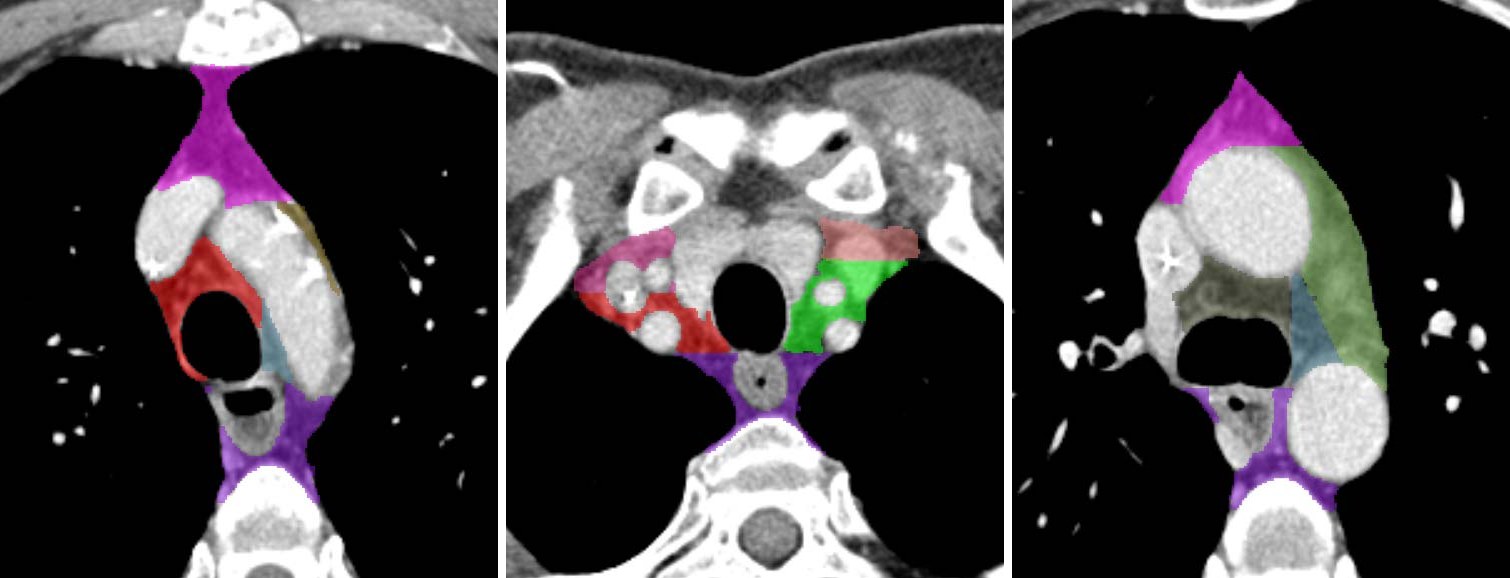
Mediastinal lymph node stations are defined by their position relative to the organs around them. These directional relations are learned automatically from expert delineations, then used to segment the stations on new CT images (mean Dice 66 %). The database of the five reference cases is publicly available.
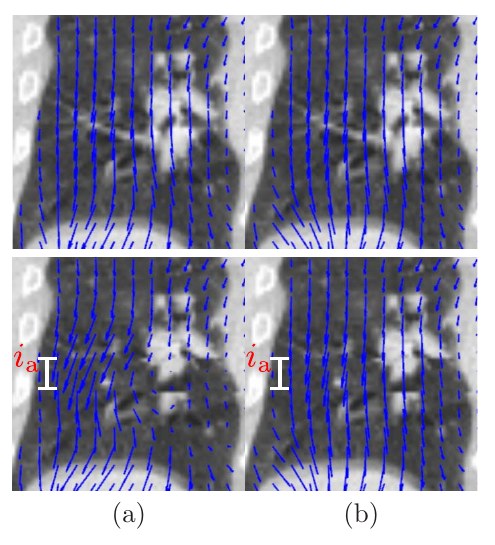
Estimating lung motion in 4D CT is difficult because of artefacts. Instead of registering each breathing phase separately, the motion of every point over the whole respiratory cycle is modelled as one smooth cyclic trajectory (B-splines in space and time), which is more robust to artefacts.